Overview on Acetylene as An Alternative Fuel in Engine Fuel Blends
Corresponding Author:
Happy SINKALA
Received: 22.12.202
Accepted 27.03.202
Summary:
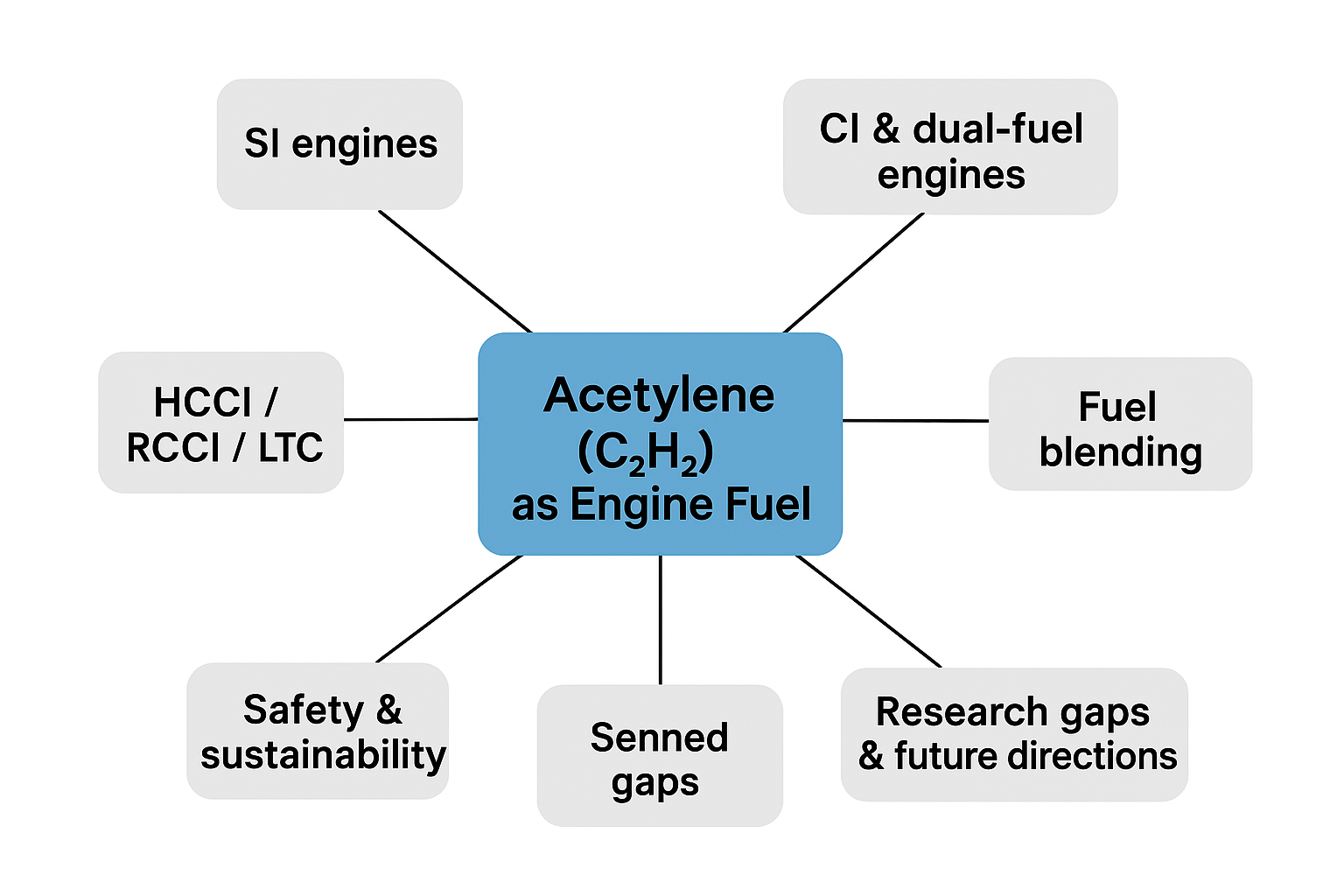
Acetylene (C₂H₂) has attracted research interest as a high-reactive fuel for internal combustion engines due to its high flame speed, low ignition energy, and wide flammability limits. When introduced as a supplementary fuel, acetylene can change combustion characteristics, enabling improved thermal efficiency, extended lean operation, and substantial reductions in particulate emissions across spark-ignition (SI), compression-ignition (CI), and advanced combustion concepts. However, these advantages are counterbalanced by pronounced challenges related to abnormal combustion, elevated pressure rise rates, increased NOx emissions, and stringent safety constraints. Drawing from peer-reviewed articles, this study offers a comprehensive synthesis of experimental, numerical, and system-level research on acetylene-fueled engines. The performance, combustion behavior, and emission characteristics of SI, CI, dual-fuel, HCCI, and RCCI setups are systematically compared. The review reveals the limited operational periods in which acetylene can be used efficiently, discusses differences between research, and shows recurring tendencies. When safety, storage, and life-cycle sustainability factors are evaluated, it becomes clear that acetylene's production process, rather than just its in-cylinder advantages, dominates its environmental viability. Acetylene is better positioned as a combustion enhancer in tightly regulated multi-fuel systems rather than as a stand-alone alternative fuel. The research also identifies important research objectives needed for any future practical deployment.
Graphical Abstract: